
Our Story
Aiden Garrison is an entrepreneur, policy observer and geopolitical commentator living in the Gold Coast Hinterland.
His career didn't follow a straight line — and that's precisely what makes his perspective worth reading.
After more than a decade in corporate sales and strategy with some of Australia's leading brands, Aiden moved into property development — buying, selling and developing with considerable success. But commercial achievement without purpose felt like an incomplete equation. A conversation with a close friend changed the direction of everything.
Both men had noticed the same uncomfortable reality. Young Australians living with disability were stacked in hospital wards and aged care facilities never designed for them. The elderly were sitting in dementia wards in their most vulnerable years with nowhere appropriate to go. The public hospital system was groaning under the weight of people it couldn't properly serve. Nobody was solving it.
That observation became Saorsa Health.
What started as a property and accommodation response grew into something far more ambitious. When Saorsa brought in an experienced operational leader from the non-profit sector, the model evolved rapidly — spanning Specialist Disability Accommodation, healthcare staffing and intermediate care facilities. The mission was straightforward: take pressure off an overwhelmed public system and give vulnerable Australians somewhere to live with dignity and independence.
The vision extended well beyond Australia's borders. Facing a chronic nursing shortage, Aiden looked to Cambodia and the Philippines for a solution that was as humanitarian as it was practical. Women from Cambodia would train as nurses in the United Kingdom, come to Australia to work, and ultimately return home — equipped to strengthen Cambodia's own healthcare system from the inside. The Philippines served as the near-term staffing pipeline while the longer programme took shape. It was a business model with a genuine human development philosophy at its core.
Then the ground shifted.
Government policy changes to NDIS pricing and rental structures fundamentally altered the economics of the model. It was one of the most important lessons of Aiden's career — the profound risk of building a business entirely within a government-regulated framework where policy can change overnight, regardless of which party holds power.
What struck him most wasn't the policy change itself. It was a series of meetings with senior government officials — both state and federal — where Aiden laid out exactly what Saorsa had built and what it could do for the public hospital system. The response was consistent: polite, interested and ultimately immovable. The concept of a genuine public-private partnership in healthcare wasn't something the prevailing ideology could comfortably accommodate — even when the evidence was sitting right across the table. Bureaucrats had already begun announcing their own version of the intermediate care facility Saorsa had pioneered. Even the nurses union — supportive in private — acknowledged they couldn't be seen to back a private operator. Good intentions. Rigid frameworks. And real people still waiting for somewhere to go.
Saorsa did not survive. It was a hard and honest outcome.
But the experience left Aiden with something most commentators simply don't have — a ground-level understanding of how government ideology, institutional inertia, international relations and human lives collide in ways that policy papers rarely capture and politicians rarely admit.
That understanding now drives a new focus.
Aiden writes and speaks about geopolitics, global policy and the forces reshaping the Western world. He is particularly interested in the disintegration of the middle class across Western democracies — not as an economic statistic, but as a lived human experience he has watched unfold among people close to him. He observes how that disintegration has driven millions of ordinary people toward the political edges, not out of ideology but out of exhaustion — and how immigration has become the explanation handed to people whose real grievance is that the political class stopped looking after them decades ago.
He is not interested in scoring political points. He is interested in asking uncomfortable questions about why well-intentioned systems keep failing the people they exist to serve — and what history tells us about where that leads.
He is based in the Gold Coast hinterland, Queensland.
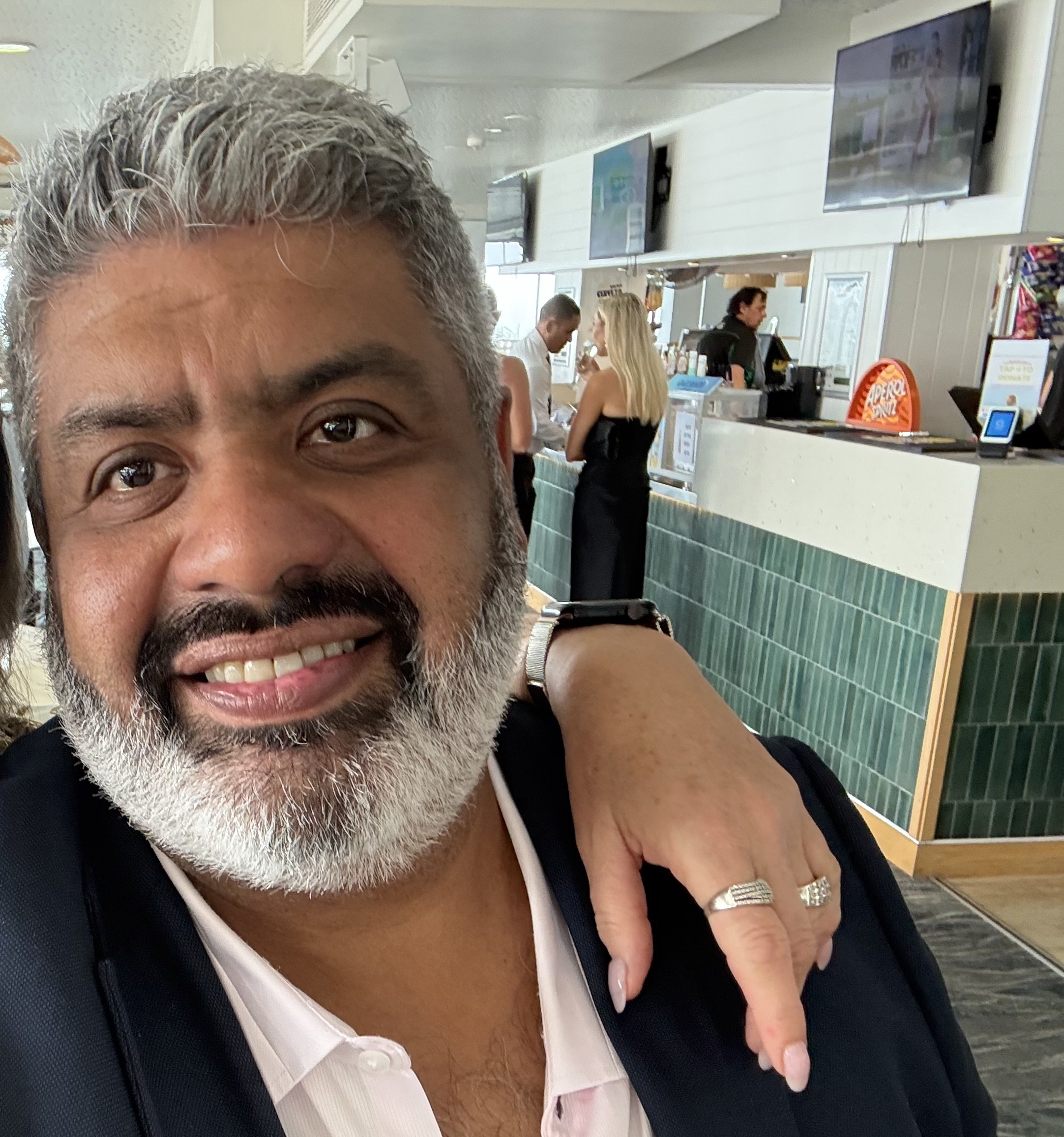
Asking questions. Finding answers. Going where the story is.